Is Selling Copy Products Halal? What the Banuri Town Fatwa Says
Shoaib Ecommerce Team10 min read
Key takeaways
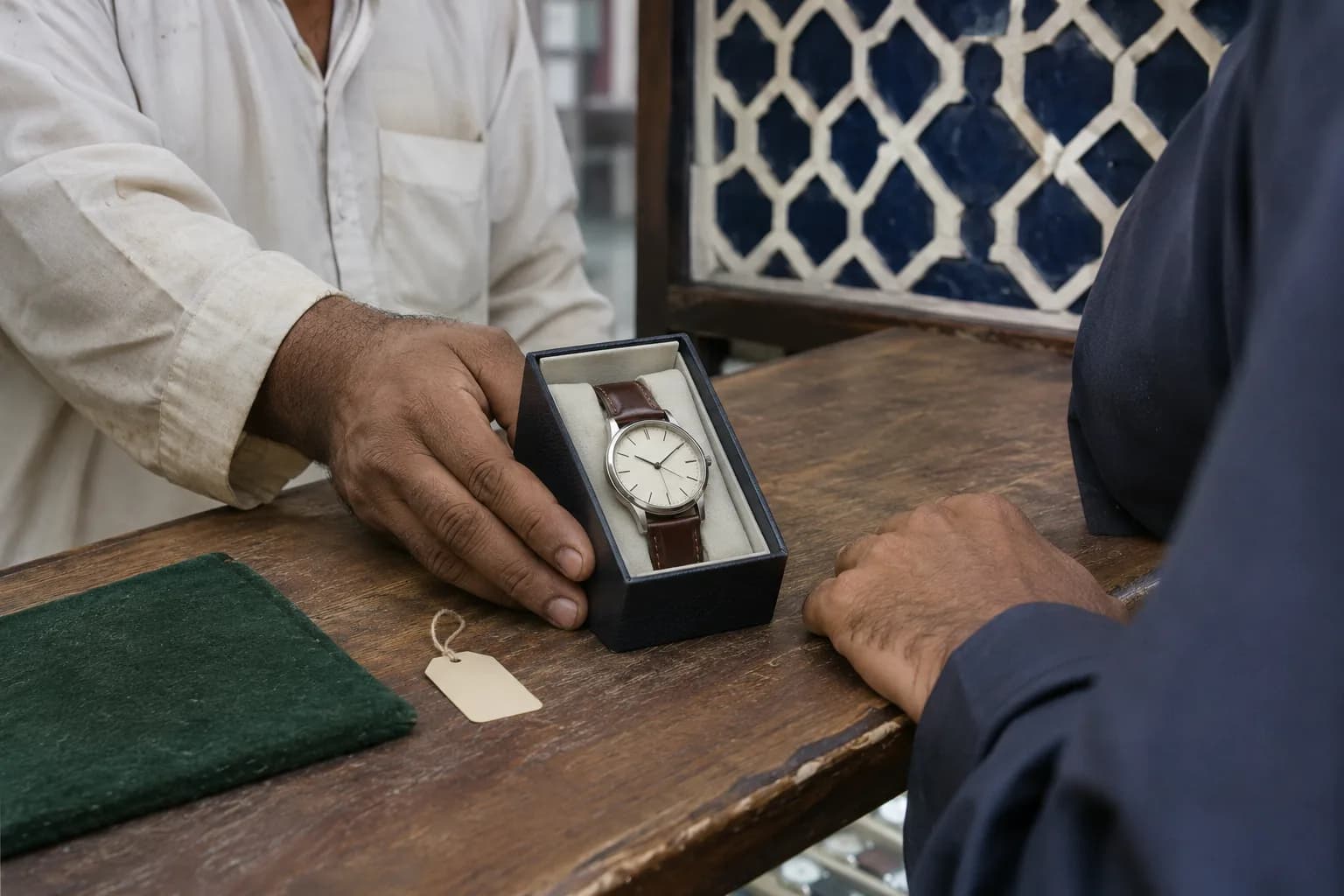
- Darul Ifta, Jamia Uloom-ul-Islamia Banuri Town, Karachi ruled (fatwa No. 144012201985, 19 November 2019) that selling copies of branded watches is permissible on two conditions.
- Condition one: the customer is told the item is a copy, not the original branded product.
- Condition two: the customer is charged the copy price, not the branded price.
- Hiding it and charging the original price is deception. Only the copy-price portion of that money is halal; the extra is haram for the seller.
- This article explains a published ruling. It is not a fatwa itself, so ask a mufti about your own situation.
In this article
If you are thinking about selling online in Pakistan, you have probably seen first copy and second copy products everywhere: watches, bags, shoes, sunglasses. And if you care about your deen, a fair question follows. Is this money halal, or am I earning from fraud?
You do not need to guess. Darul Ifta, Jamia Uloom-ul-Islamia Banuri Town in Karachi answered exactly this question in a published fatwa. This article walks through what it says, the two conditions it sets, and what those conditions mean when you are selling through Instagram captions and DMs.
Is selling first copy products halal? The short answer
According to the Banuri Town fatwa, selling a copy product is permissible when two things are true: the buyer is told it is a copy, and the buyer is charged the copy price. The fatwa gives its permission only when both are true, so meeting one of them is not enough.
What makes it wrong is not the copy itself. It is the lie. If a seller hides that the item is a copy and takes the branded price for it, the fatwa calls that deception, and part of that money becomes haram for the seller.
The fatwa itself
Here are the details, so you can check them yourself rather than taking anyone's word for it:
- Issued by: Darul Ifta, Jamia Uloom-ul-Islamia Banuri Town, Karachi
- Fatwa number: 144012201985
- Date issued: 19 November 2019
- Where to read it: the original fatwa on banuri.edu.pk (in Urdu)
The question put to the Darul Ifta was about selling copies of branded watches. That is why the web address reads "branded ghariyon ki copy farokht karna", which means selling copies of branded watches. The ruling sets out a principle about honesty in a sale, and it is the principle that matters for anyone selling copy products.
This is the ruling in the fatwa's own words:
صورتِ مسئولہ میں برانڈڈ گھڑیوں کی کاپی (فرسٹ یا سیکنڈ کاپی) فروخت کرتے ہوئے اگر گاہک کو بتادیا جائے کہ یہ اصل (برانڈڈ) نہیں اور قیمت بھی نقل (کاپی) والی وصول کی جائے تو اس کا کاروبار کرنا جائز ہے، اور اگر گاہک کو لاعلم رکھ کر کاپی (نقل) فروخت کی جائے اور قیمت اصل (برانڈڈ) والی وصول کی جائے تو ایسا کرنا ناجائز اور دھوکا دہی ہے اور ایسی کمائی میں نقل (کاپی) کے بقدر قیمت تو حلال ہوگی، اس سے زائد قیمت فروخت کرنے والے کے لیے حرام ہوگی۔
In English, the meaning is this. In the case asked about, if the customer is told that a copy (first or second copy) of a branded watch is not the original, and the copy price is charged, then doing this business is permissible. If the copy is sold while keeping the customer unaware, and the original branded price is charged, that is impermissible and deception. From such earnings, the amount equal to the copy's price is halal, and anything above it is haram for the seller.
One more point needs to be clear. This fatwa is a general ruling about the practice of selling copies. It was not written about Shoaib Ecommerce, and Banuri Town has not certified or reviewed this course. When our site says the business is "verified by fatwa", it means the practice we teach, selling honestly, matches the conditions in this published ruling.
Condition 1: tell the truth
The first condition is simple to say: the customer must know the item is not the original branded product. The fatwa's words are that the buyer is told "یہ اصل (برانڈڈ) نہیں", that this is not the original.
Notice what this asks of you. It is not enough to avoid saying "original". If your photos, caption and price all suggest a genuine branded item, a buyer can be misled without you ever telling a direct lie. The safe reading is that the buyer should clearly understand what they are getting before they pay.
In practice, that means words like "copy", "first copy" or "not original" appear where the buyer will actually see them, not hidden in small print. If someone asks you in a DM whether it is original, you give a straight answer.
Condition 2: charge the copy price
The second condition is about money. The fatwa says the price taken should be the copy price, "قیمت بھی نقل (کاپی) والی". You cannot tell the buyer it is a copy and still charge what the real branded item costs.
Why does this matter even if you were honest about it being a copy? Because the price is part of the message. A branded price on a copy item quietly tells the buyer it is worth what the original is worth. Charging a fair copy price keeps your words and your price saying the same thing.
This does not mean you earn nothing. A seller can still make a profit on a copy product. The point is that the price should match what is actually being sold.
What makes it haram
The fatwa is direct about the wrong way to do it. If the seller keeps the customer unaware ("لاعلم رکھ کر") and charges the original branded price, the ruling calls it "ناجائز اور دھوکا دہی": impermissible, and deception.
It then says something many sellers do not expect. The whole amount does not become haram. Only the part equal to the copy price is halal. Anything taken above that is haram for the seller. So a seller who hides the truth to charge more is not making extra profit at all. That extra is money they had no right to.
If you think a past sale of yours may fall into this, that is a question for a mufti, not a blog post. They can tell you what to do about money already earned in your specific case.
The principle behind the ruling
Fatwas usually cite their evidence, and this one quotes Al-Durr al-Mukhtar, a well-known book of Hanafi fiqh (volume 5, page 47):
لايحل كتمان العيب في مبيع أو ثمن؛ لأن الغش حرام …
This means: it is not permissible to hide a defect in the goods or in the price, because cheating (ghish) is haram. The full passage in the fatwa goes on to name two narrow exceptions, neither of which is about selling goods to a customer. The fatwa closes with "فقط والله أعلم", and Allah knows best.
This is the heart of it. A copy product is not haram because it is a copy. Hiding what it is, so the buyer pays more than they would if they knew, is cheating. Remove the hiding and the overcharge, and the reason for the prohibition is gone. That is why both conditions in the fatwa point at the same thing: the buyer must know the truth about the product and the price.
How this looks in practice on Instagram
On Instagram, most of your selling happens in two places: the caption under a post and the conversation in your DMs. Both are where the fatwa's conditions either hold up or fall apart.
In your captions
- If a product is a copy, say so in the caption itself, in words a normal buyer understands.
- Do not use the word "original" or wording that suggests a genuine branded item when it is not.
- Make sure the price you show is a copy price, not the branded price with a small discount.
In your DMs
- When a buyer asks "is it original?", answer honestly, even if it costs you that sale.
- Repeat what the product is before you confirm the order, so there is no confusion later.
- Never let a buyer leave the chat believing something you know is not true.
There is a business reason for this too. A buyer who knew what they were buying and paid a fair price has no reason to feel cheated. A buyer who was misled is more likely to cancel, refuse delivery or return the item. In the course's model, orders that are cancelled, returned or refused do not earn a commission, as our terms explain.
Honest selling is built into how Shoaib Ecommerce teaches. Our terms put it plainly: "Sell honestly. The course teaches transparent selling, including always telling customers exactly what a product is before they buy." Week 3 of the course covers closing sales in DMs, which is exactly where this rule gets tested. You can see the full week-by-week plan in Inside the 30-Day Instagram eCommerce Course.
If you are new to the model, it helps to understand how the business works first. Products are already picked for you and our team handles delivery, so your job is bringing in the customer and being truthful with them. How a No-Inventory Instagram Business Works explains the full flow, and you can read more about why Shoaib Zareen built the training on the about page.
Frequently asked questions
Is selling first copy or second copy products halal?
According to Banuri Town fatwa No. 144012201985, selling copies of branded watches is permissible when the customer is told it is not the original and is charged the copy price. If you hide that it is a copy and charge the branded price, the fatwa calls it deception. For your own case, ask a mufti.
Copy products bechna jaiz hai ya nahi?
Fatwa No. 144012201985 ke mutabiq jaiz hai, agar customer ko saaf bata diya jaye ke yeh original nahi, copy hai, aur qeemat bhi copy wali li jaye. Copy ko original bata kar original ki qeemat lena dhoka hai aur najaiz hai. Apni surat-e-haal ke liye kisi mufti se zaroor poochein.
Where can I read the fatwa?
It is published in Urdu on the Banuri Town website: read fatwa No. 144012201985 on banuri.edu.pk. It was issued on 19 November 2019 by Darul Ifta, Jamia Uloom-ul-Islamia Banuri Town, Karachi.
Did Banuri Town approve the Shoaib Ecommerce course?
No. The fatwa is a general ruling about selling copies of branded watches. It was not issued for this course. The course teaches selling in the honest way the fatwa describes: telling customers exactly what a product is before they buy.
What if I already sold a copy without telling the buyer?
The fatwa says that in such a sale, only the amount equal to the copy price is halal and anything above it is haram for the seller. What you should do about money already earned is a question to take to a qualified mufti.
Does this rule apply to the products in the course?
Students get pre-vetted, ready-to-sell products, and the course's rule for all of them is the same: tell the customer exactly what a product is before they buy. When a product is a copy, that means saying so and charging the copy price, as the fatwa requires. The 30-day course page answers more questions about how it works.